

Ankle Sprain Physio Sydney: Elite Recovery Protocol
Ankle sprains are the most underestimated injury in sport. Athletes roll their ankle, apply some ice, rest for a week, and walk back onto the field thinking the job is done. It is not. Chronic ankle instability develops in up to 40% of people who experience a lateral ankle sprain, largely because the initial rehabilitation was rushed, incomplete, or focused only on pain relief rather than full neuromuscular restoration. If you are looking for ankle sprain physio in Sydney and want the same structured, criteria-based approach used with elite athletes, this guide lays out exactly what that process looks like from day one through return to sport.
Table of Contents
- Understanding Ankle Sprains: Grades, Ligaments, and Why Classification Matters
- The PEACE and LOVE Protocol: Why RICE Alone Is Not Enough
- Phase One: Acute Management (Days 1 to 5)
- Phase Two: Subacute Rehabilitation and Load Introduction (Days 5 to 21)
- Phase Three: Functional Strength and Neuromuscular Control (Weeks 3 to 6)
- Phase Four: Return-to-Sport Criteria and Testing
- Comparing Rehabilitation Approaches: What the Evidence Actually Supports
- The Mistakes That Set Athletes Back by Weeks
- Frequently Asked Questions
- References
Quick Takeaways
| Key Insight | Explanation |
|---|---|
| Grade classification determines your timeline | A Grade I sprain (incomplete ATFL tear) and a Grade III sprain (complete ATFL and CFL tear) require fundamentally different protocols. Treating both the same way causes either unnecessary delays or dangerous early return. |
| RICE is outdated as a complete approach | The PEACE and LOVE framework has replaced RICE for comprehensive ankle sprain management. It covers the full healing continuum, not just the first 48 hours. |
| Proprioception is the most neglected component | Pain and swelling resolve weeks before neuromuscular control is restored. Athletes who skip balance and joint-position training are the ones who re-sprain on the same ankle. |
| Return-to-sport must be criteria-based, not time-based | Functional performance tests, including the Y-Balance Test and single-leg hop tests, provide objective clearance markers. Passing a time window alone is not sufficient. |
| Early controlled movement beats prolonged rest | Active and passive mobilisation during the inflammatory phase reduces pain, prevents venous stasis, and improves local circulation for faster oedema clearance. |
| External ankle support should continue for at least 12 months | Evidence supports using bracing or taping during sport for at least one year following a significant lateral ankle sprain to guard against recurrence while mechanical stability is rebuilt. |
| Chronic instability is preventable, not inevitable | Athletes who complete a full, structured physiotherapy program, including strength, proprioception, and sport-specific loading, can expect full restoration of ankle function without residual instability. |
Understanding Ankle Sprains: Grades, Ligaments, and Why Classification Matters
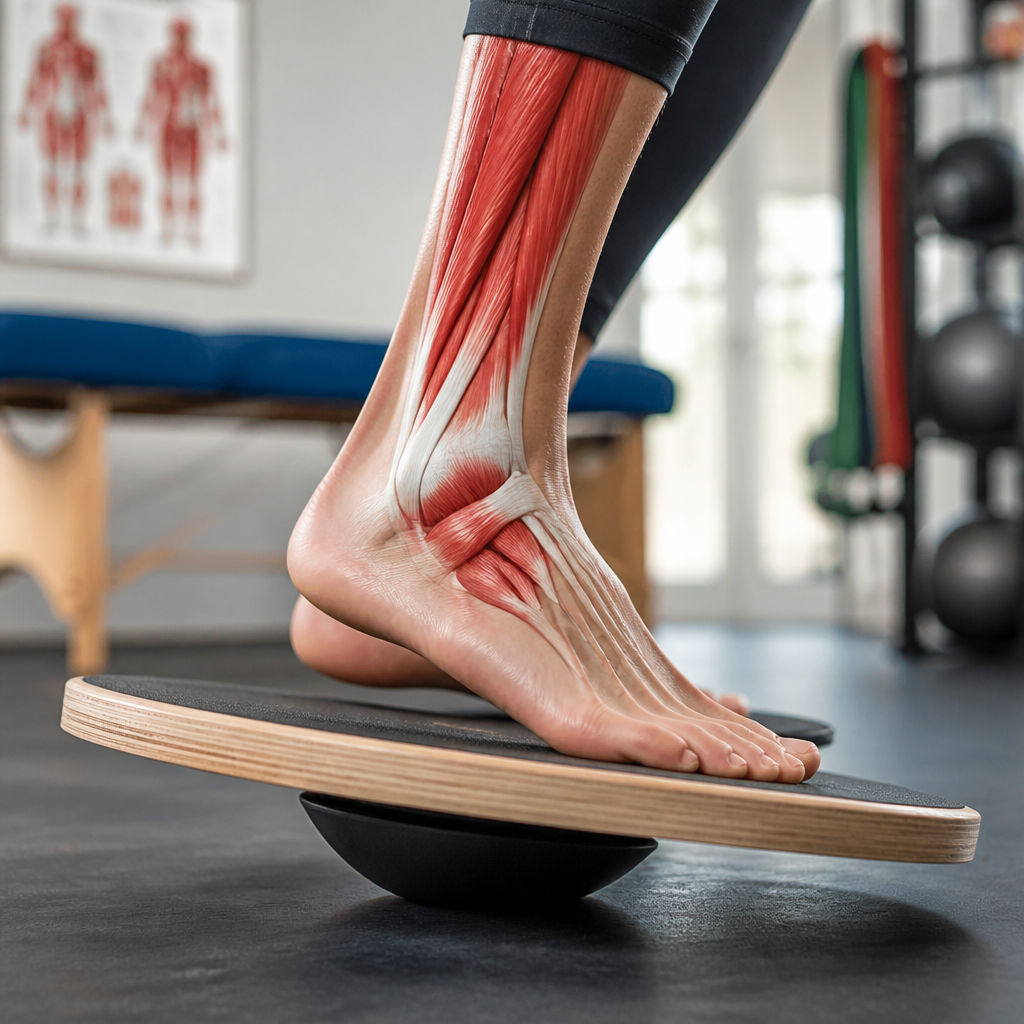
Before any treatment decision is made, the injury needs to be accurately classified. The lateral ankle is the most vulnerable structure, comprising three ligaments: the anterior talofibular ligament (ATFL) , the calcaneofibular ligament (CFL), and the posterior talofibular ligament (PTFL). The ATFL is the weakest of the three and is almost always the first to be damaged. The most common mechanism is inversion combined with excessive ankle supination in forced plantarflexion, the classic "rolled ankle" position where the joint is at its most unstable.
Ankle sprains are classified into three grades. Grade I is a mild injury involving an incomplete tear of the ATFL. Grade II is a moderate injury with a complete tear of the ATFL, with or without a partial tear of the CFL. Grade III is severe, with complete tears of both the ATFL and the CFL. Grades I and II respond well to structured functional treatment. Grade III injuries may require a short period of protection, typically no more than 10 days in a brace, before functional rehabilitation begins.
Why does accurate grading matter? Because the rehabilitation timeline, the loading parameters, and the return-to-sport criteria all change based on the severity of tissue damage. A Grade I sprain in a fit athlete can resolve to full function in two to three weeks with the right program. A Grade III sprain in the same athlete may require six weeks of structured physiotherapy before unrestricted sport is safe. Treating both with the same "rest and ice" approach means the Grade I athlete is held back unnecessarily and the Grade III athlete is cleared too early.
Pro tip: If you have significant swelling, bruising extending into the midfoot, or cannot bear weight within the first 24 hours, get assessed by a physiotherapist before assuming it is a minor sprain. High-grade sprains, syndesmotic injuries, and osteochondral damage are frequently mismanaged when self-diagnosed as "just a rolled ankle."
The PEACE and LOVE Protocol: Why RICE Alone Is Not Enough
The RICE protocol, which stands for Rest, Ice, Compression, and Elevation, has been the default first-aid response to ankle sprains for decades. The problem is not that RICE is harmful. The problem is that it only addresses the first 48 hours of a healing process that spans weeks. The PEACE and LOVE framework provides a complete continuum of care from the moment of injury through functional restoration.
PEACE covers the immediate phase. Protection means avoiding activities that increase pain in the first couple of days. Elevation reduces oedema by positioning the ankle above heart level. Avoid anti-inflammatory modalities in the early phase, as some inflammation is part of the necessary healing response. Compression using a bandage or sleeve limits swelling. Education ensures the athlete understands the process and does not rush or panic.
LOVE covers the subsequent management phase. Load means returning to controlled movement early, as active and passive mobilisation reduces pain, prevents venous stasis, and improves local circulation to accelerate oedema clearance. Optimism is a clinical factor as much as a psychological one, since a positive but realistic outlook influences rehabilitation outcomes. Vascularisation through early aerobic activity supports tissue healing. Exercise, meaning targeted strength and neuromuscular training, is the core of long-term recovery.
The shift from RICE to PEACE and LOVE reflects a broader clinical understanding that tissue healing is an active biological process. The goal of early management is not to shut the body's response down, but to direct it productively through graduated loading and movement.
At an evidence-based sports injury clinic in Alexandria, this framework is not just philosophy. It changes the specific interventions applied on day one versus day seven versus week four, and it prevents the common pattern of early pain relief followed by premature return followed by re-injury.
Phase One: Acute Management (Days 1 to 5)
Protecting the Joint Without Immobilising It
The acute phase is about protecting the injured tissue while keeping the ankle moving within a pain-free range. Total immobilisation slows recovery. For most Grade I and II sprains, the athlete should be weight-bearing as tolerated from day one, using crutches only if the pain makes full weight-bearing impossible. A rigid brace or compression sleeve provides external support without stopping movement entirely.
Elevation matters more than most athletes give it credit for in the first 48 to 72 hours. Keeping the ankle above the level of the heart for extended periods is one of the most effective ways to limit swelling, which directly affects how quickly the athlete can begin loading the joint. An ankle that is still significantly swollen at day five is an ankle where early rehabilitation has been mismanaged.
What Your Physio Is Actually Assessing
A thorough initial assessment at this stage involves more than confirming the sprain. Your physiotherapist should rule out fractures using the Ottawa Ankle Rules, assess for syndesmotic injury, check for any signs of osteochondral damage, and screen for peroneal tendon involvement. These are not rare complications. They are frequently missed when assessment is superficial or when the athlete self-manages for the first week without professional input.
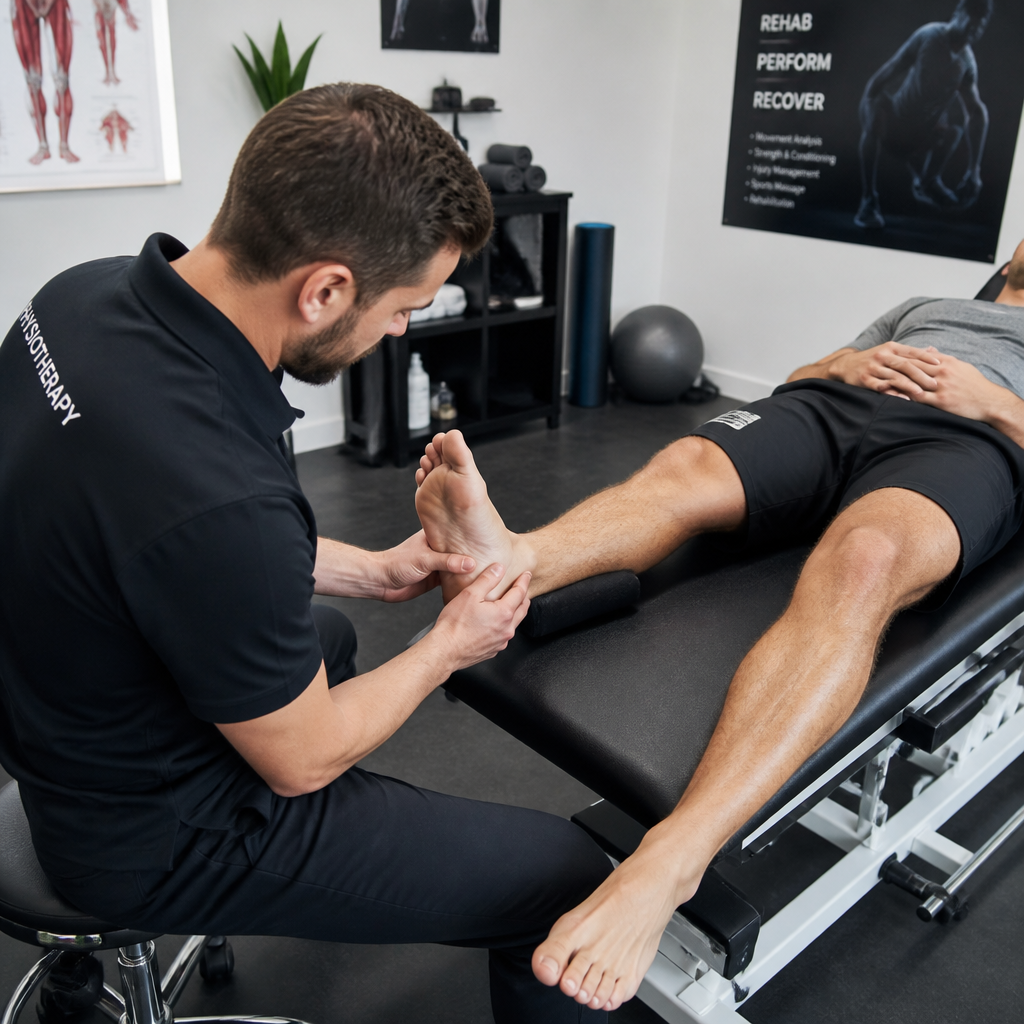
Manual therapy techniques applied early, including subtalar distraction, medial subtalar glide, and lateral subtalar glide, are used to reduce pain and begin restoring the normal joint mechanics that are disrupted after a sprain. These are not passive treatments. They are targeted clinical interventions that set up the next phase of rehabilitation.
Phase Two: Subacute Rehabilitation and Load Introduction (Days 5 to 21)
Once the acute inflammatory response has settled and the athlete can bear weight comfortably, the focus shifts to restoring range of motion, beginning strength work, and introducing the early foundations of proprioceptive training. This is the phase where most non-elite athletes stop their rehabilitation. Pain is manageable, the ankle "feels okay," and the temptation to return to normal activities is strong. Stopping here guarantees incomplete recovery.
Range of Motion Restoration
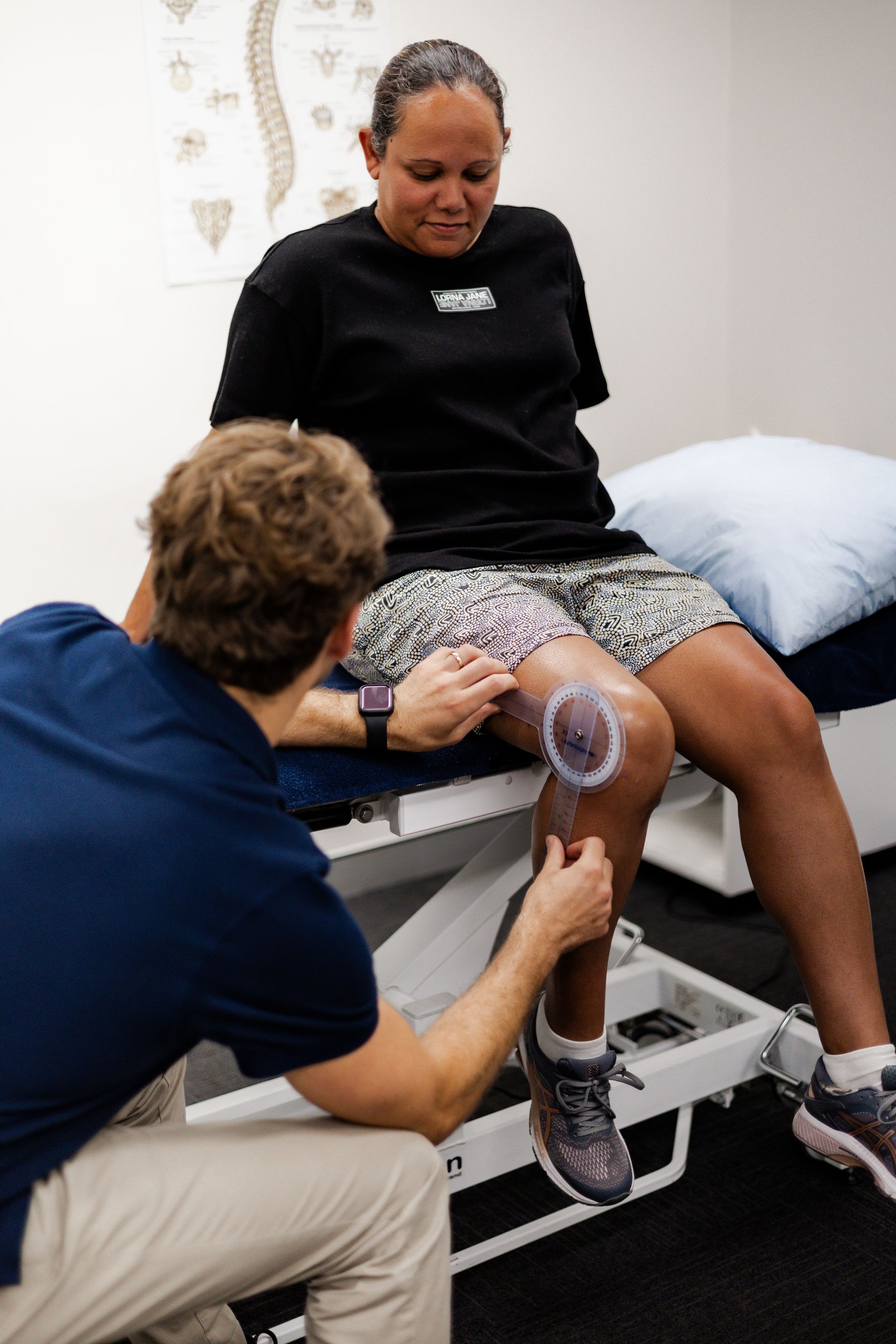
Dorsiflexion range of motion is consistently one of the most important factors in both ankle sprain recovery and future recurrence prevention. Limited dorsiflexion is a documented risk factor for re-injury. Active ankle circles, towel stretches, and progressive weight-bearing calf stretches are introduced during this phase, with the specific range targets adjusted based on what the uninjured ankle can do. Symmetry is the goal, not an arbitrary angle measurement.
Early Strength and Calf Loading
The calf complex, specifically the gastrocnemius and soleus, provides the primary dynamic support for the ankle during sport. Isometric calf work begins in the subacute phase, progressing to double-leg calf raises, then single-leg calf raises as pain and strength allow. The single-leg heel raise test is used as a clinical milestone: the ability to perform this exercise with control and without compensation indicates the calf complex is absorbing load appropriately.
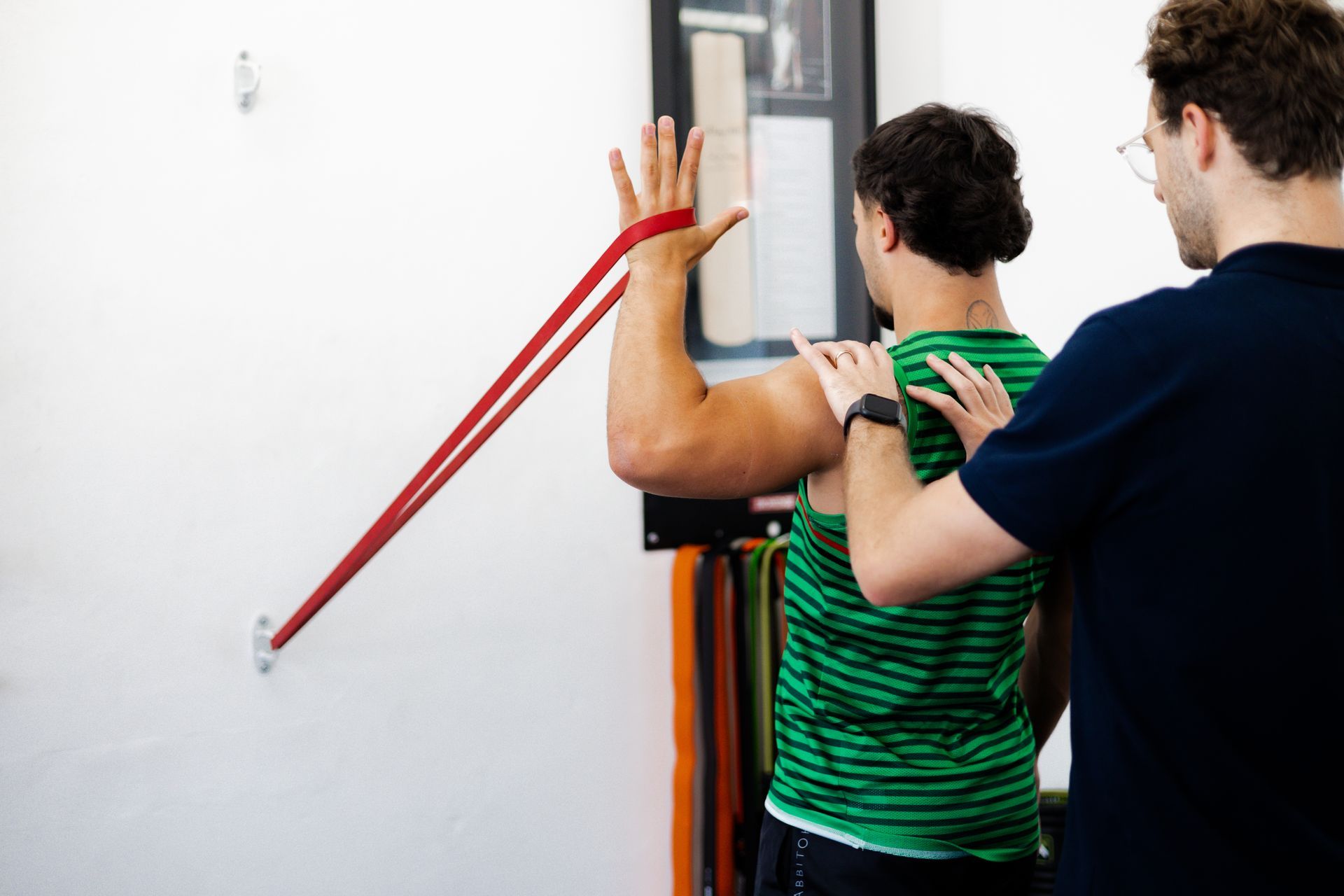
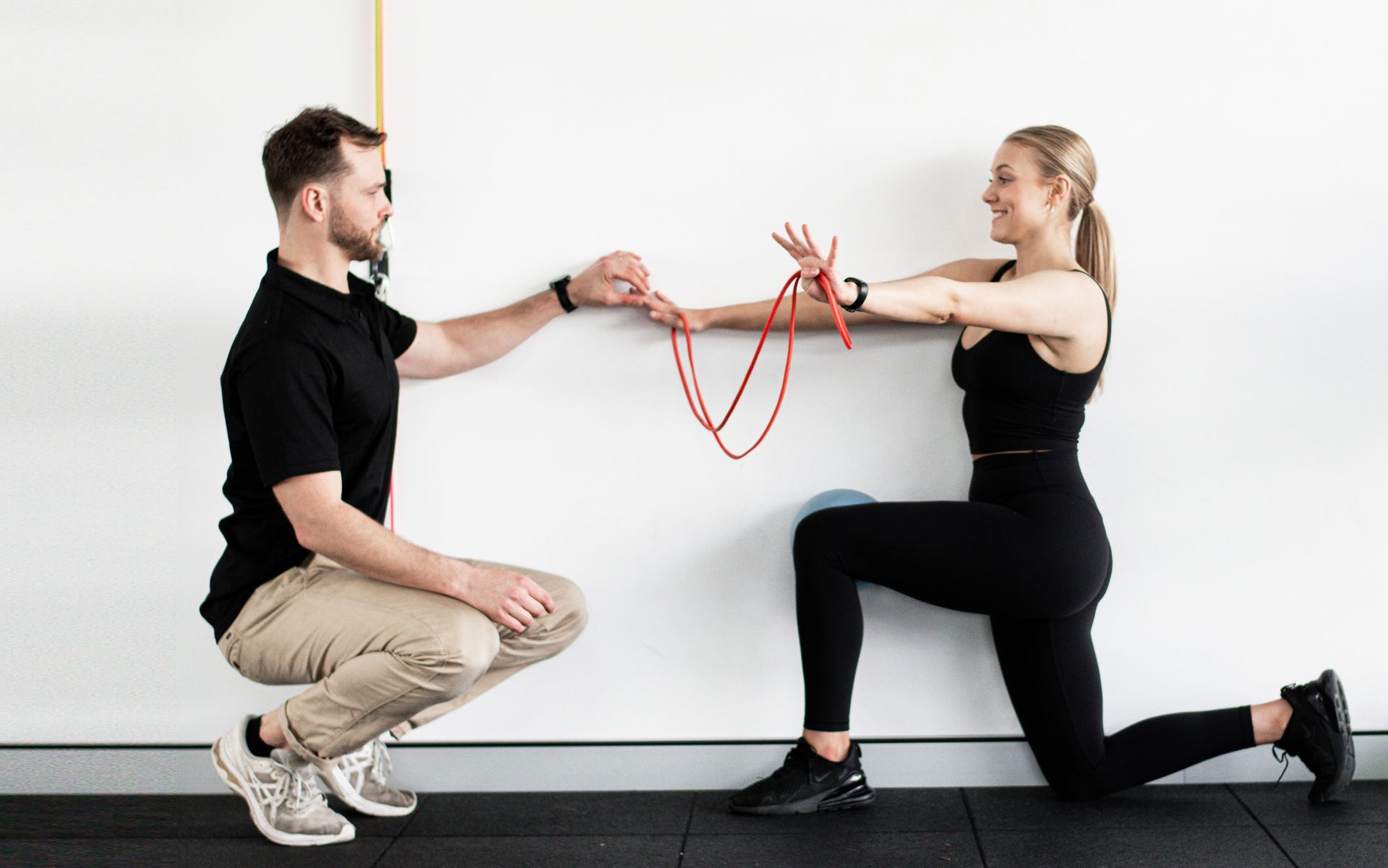
Peroneal muscle strengthening is equally important and often overlooked in generic ankle rehabilitation. The peroneals are the primary dynamic stabilisers of the lateral ankle, and they are directly stressed during the inversion mechanism that causes the sprain in the first place. Resistance band eversion exercises, progressing in resistance and speed, are a non-negotiable part of this phase.
Pro tip: Do not wait until you have zero pain before starting peroneal strengthening. Working within a pain-acceptable range (typically 3 out of 10 or less) accelerates recovery compared to waiting for full pain resolution before loading the tissue.
Phase Three: Functional Strength and Neuromuscular Control (Weeks 3 to 6)
This is the phase that separates comprehensive rehabilitation from superficial recovery. The ankle may feel close to normal at this point. The athlete can walk without pain, has most of their range of motion back, and calf strength is improving. But the neuromuscular system, specifically the brain-to-ankle communication that tells the joint where it is in space and how to respond to sudden changes in surface or direction, has not fully recovered.
Proprioception Training: The Non-Negotiable Element
Proprioceptive deficits persist long after structural healing is complete. This is the underlying mechanism behind chronic ankle instability and repeat sprains. Proprioception training starts with static single-leg balance on a stable surface, progresses to unstable surfaces, then to dynamic balance challenges. The Y-Balance Test is used as both a training tool and a clinical milestone. The modified Stork Balance Test assesses static proprioceptive capacity. Both must be passed before progressing to higher-load activities.
The progression logic is clear: proprioceptive skills (sensory perception, afferentiation, joint position sense) are fundamental abilities that must be restored before any high-load activity like running, cutting, or jumping is reintroduced. Training these skills early and progressing them systematically is what distinguishes protocols that prevent re-injury from protocols that merely treat the immediate sprain.
Sport-Specific Loading and Running Mechanics
Running is a milestone, not a given. The transition back to running is a specific clinical decision based on calf strength, proprioceptive capacity, and observed running mechanics, not just the absence of pain. A qualitative running analysis is performed to check that the athlete is not compensating with altered hip or knee mechanics that could load the ankle abnormally or transfer stress to adjacent structures.
Once straight-line running is established with good mechanics, agility work, change-of-direction drills, and sport-specific loading are introduced progressively. Hop tests, including single-leg triple hops and lateral hop sequences, are used to assess dynamic load capacity and guide the final progression to full training.
Phase Four: Return-to-Sport Criteria and Testing
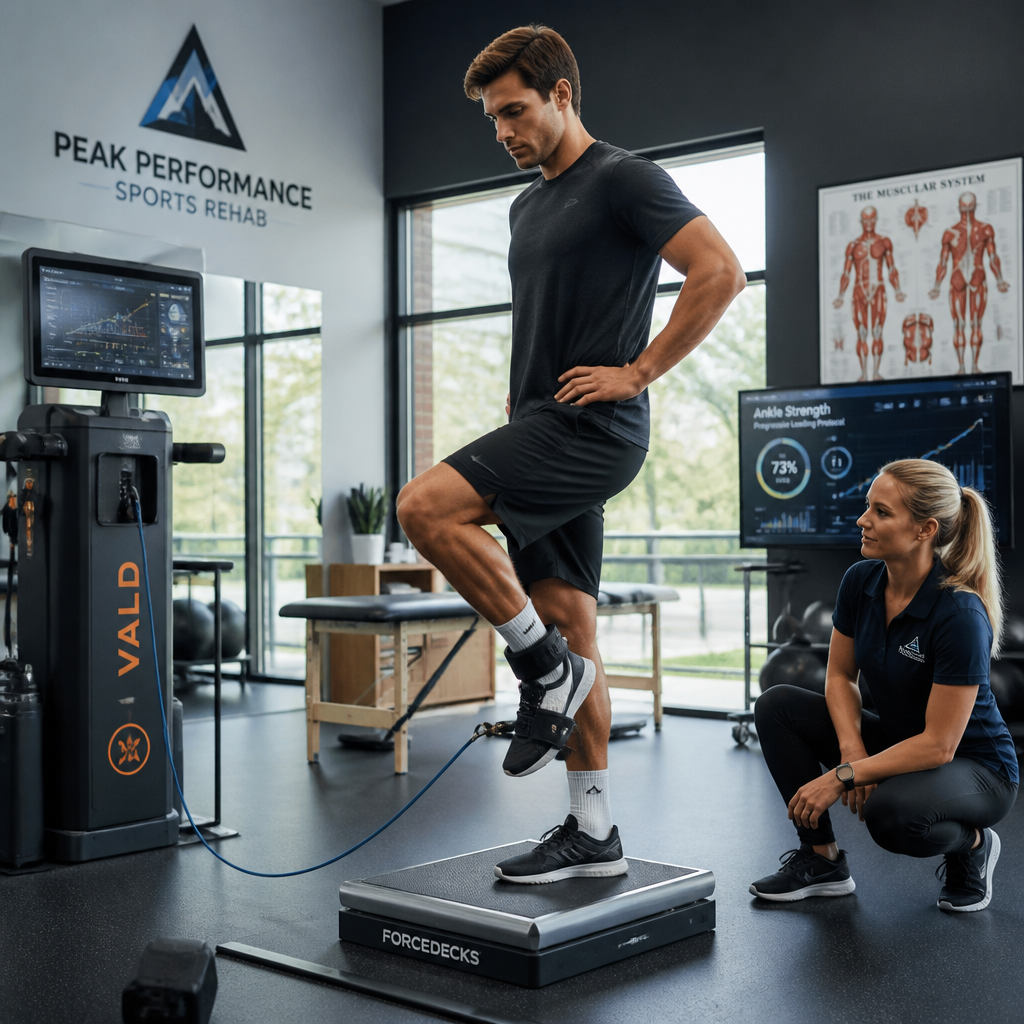
Return-to-sport decisions made on time alone are insufficient. A criteria-based approach uses objective functional performance tests to determine when an athlete is genuinely ready for unrestricted participation. This is the standard used with professional athletes, and it should be the standard applied to every athlete regardless of level.
The key return-to-sport markers include: passing proprioception tests on both static and dynamic balance assessments, demonstrating symmetrical single-leg calf endurance, completing hop test sequences with limb symmetry indices within accepted clinical ranges, and performing sport-specific movement patterns without pain, compensation, or reported apprehension.
External ankle support, whether bracing or supportive taping, is recommended during sport for at least 12 months following a significant lateral ankle sprain. This is not a sign of incomplete recovery. It is a recognised protective measure while the proprioceptive system and mechanical stability continue to consolidate over the longer term. Athletes who follow this guidance consistently show lower re-injury rates.
If you are in Sydney and have been cleared to return to sport by someone who just asked "how does it feel?" without conducting any functional testing, you have not been properly assessed. The team at Alexandria Physiotherapy and Sports Injury uses structured, criteria-based discharge protocols for exactly this reason.
Comparing Rehabilitation Approaches: What the Evidence Actually Supports
Not all ankle sprain rehabilitation is equal. Below is a comparison of the three main approaches seen in clinical practice, from the most superficial to the most comprehensive.
| Approach | What It Includes | Clinical Outcome |
|---|---|---|
| Passive Rest and Symptomatic Treatment Only | Ice, rest, NSAIDs, compression. No structured exercise or manual therapy. Return based on pain resolution. | Adequate for very mild Grade I sprains in sedentary individuals. High recurrence and chronic instability rates in athletes. Neuromuscular deficits persist unaddressed. |
| Standard Exercise-Based Rehabilitation | PEACE and LOVE principles, range of motion work, basic calf and peroneal strengthening, single-leg balance. Limited sport-specific loading. | Good outcomes for recreational athletes. Faster return than passive management. May not fully restore high-load neuromuscular control needed for competitive sport. |
| Criteria-Based Elite Protocol | Graded loading from day one. Manual therapy. Progressive proprioception training. Objective functional testing (Y-Balance, hop tests, running analysis). Criteria-based return-to-sport clearance. Bracing for 12+ months. | Best outcomes across all ankle sprain grades. Lowest re-injury rates. Full restoration of ankle function. Used with professional athletes and recommended for all active individuals. |
The criteria-based elite protocol is not more complicated than standard care. It is more thorough and more disciplined. It treats every phase of recovery with specific intent rather than waiting for symptoms to subside and calling it done.
The Mistakes That Set Athletes Back by Weeks
After treating athletes at every level, including those competing in professional sporting competitions, the mistakes that derail ankle sprain recovery are remarkably consistent. They are not obscure errors. They are predictable, preventable, and worth naming directly.
Returning to sport based on pain, not function. Pain is one of the last things to resolve in an ankle sprain. But neuromuscular control and proprioception recover on a different, often longer timeline. An ankle that feels fine on a straight walk can still fail catastrophically on a sidestep, a landing, or an uneven surface. Functional testing exists precisely to catch the gap between "pain-free" and "structurally ready."
Skipping the proprioception phase because it "feels like easy exercise." Single-leg balance work does not look impressive. Athletes who train hard resist spending time on what feels like a beginner activity. This is a short-sighted view. The research is unambiguous: proprioceptive training is the single most important factor in preventing chronic ankle instability and recurrence. Skipping it because it feels simple is one of the most costly decisions an athlete can make.
Over-relying on passive treatments and ignoring active rehabilitation. Ultrasound, massage, and other passive modalities have a role in early management, but they do not rebuild the neuromuscular system. Athletes who spend the majority of their physiotherapy time on passive treatments and minimal time on progressive loading are extending their recovery unnecessarily.
Not addressing the whole kinetic chain. Hip abductor weakness, reduced hip external rotation control, and poor gluteal activation all contribute to abnormal ankle loading mechanics. A thorough ankle sprain rehabilitation program includes assessment and, where necessary, treatment of the entire lower limb, not just the ankle.
For athletes and active professionals in inner Sydney who want access to the standard of care used with elite sporting organisations, Alexandria Physiotherapy and Sports Injury offers exactly that. The clinic's founding physiotherapists have more than 20 years of experience at professional sporting organisations, and that experience directly informs how every ankle injury is assessed and managed.
Frequently Asked Questions
How long does it take to recover from an ankle sprain with physiotherapy?
Recovery time depends on the grade of the sprain. A Grade I ankle sprain treated with a structured physiotherapy program can resolve in two to three weeks. Grade II sprains typically require four to six weeks of rehabilitation before return to full sport. Grade III sprains with complete ligament tears can take six to twelve weeks depending on the athlete's baseline fitness, adherence to the program, and whether complications such as osteochondral damage are present. Time estimates based on pain alone are misleading. Functional testing drives the return-to-sport decision, not calendar weeks.
What is the difference between ankle sprain physio in Sydney and simply resting at home?
Resting at home addresses pain and swelling in the short term. It does nothing to restore the neuromuscular control, proprioception, and tissue strength that prevent re-injury. Clinical physiotherapy includes accurate grading of the injury, manual therapy to restore joint mechanics, a structured and progressive exercise program, functional performance testing, and criteria-based return to sport. Athletes who manage ankle sprains with rest alone have significantly higher rates of chronic ankle instability and recurrence compared to those who complete a full physiotherapy program.
Can I exercise with an ankle sprain, or does it need complete rest?
Complete rest is rarely necessary and often counterproductive. The current evidence-based approach supports controlled loading and movement from an early stage. Upper body training, pool-based exercise, and stationary cycling that does not load the ankle in a provocative way can all be continued from very early in the rehabilitation process. Weight-bearing exercise for the lower limb is introduced progressively based on pain levels and tissue tolerance. A physiotherapist will guide you through what is appropriate at each stage.
When should I see a physio after rolling my ankle rather than waiting to see if it gets better?
See a physiotherapist within 24 to 48 hours of the injury if you have significant swelling, bruising that extends into the foot, difficulty bearing weight, or pain directly over the bone. These are signs that the injury may be more serious than a straightforward ligament sprain, and early professional assessment can rule out fractures, syndesmotic damage, and tendon injuries that require specific management. Even if the injury is confirmed as a simple Grade I sprain, getting an early assessment and a structured program will accelerate your recovery compared to self-managing with rest alone.
Why do ankle sprains keep recurring even after the pain has resolved?
Recurrent ankle sprains are almost always the result of incomplete rehabilitation. When the neuromuscular system is not fully retrained, the ankle loses its ability to respond quickly and correctly to unexpected movements, surface changes, or perturbations. The ligaments may have healed structurally, but the joint-position sense and reactive muscle control are still impaired. This is why proprioceptive training and functional performance testing are essential, not optional, components of every ankle sprain rehabilitation program. Chronic ankle instability develops in up to 40% of people who have had a lateral ankle sprain, and the vast majority of those cases are preventable with complete rehabilitation.
Is bracing or taping necessary after an ankle sprain, and for how long?
External ankle support during sport is recommended for at least 12 months following a significant lateral ankle sprain. This is not a permanent crutch. It provides a protective external restraint while the proprioceptive system and mechanical stability of the ankle continue to consolidate. Your physiotherapist will guide you through the appropriate type of support, which may be a lace-up brace, a semi-rigid brace, or supportive taping, and when it is appropriate to reduce reliance on external support in lower-risk settings.
Have you been through ankle sprain rehabilitation before, and did it address proprioception and functional testing, or did it stop at pain relief? Share your experience in the comments below.
References
- Criteria-based rehabilitation algorithm after lateral ankle sprains in professional football: evidence-based clinical practice guidelines
- Ankle sprain assessment, classification, and evidence-based management overview from Physiopedia
- Lateral ankle sprain anatomy, grades, and functional treatment protocols reviewed in IntechOpen
- Chronic ankle instability recurrence rates and evidence for long-term external stabilisation after lateral ankle sprain
- Accelerated recovery and return to sport in elite athletes with acute lateral ankle sprains: physiotherapy-combined intervention research